Ralphie Glick’s Disappearance
'Salem's Lot: A NovelRalphie Glick’s Disappearance is the first major disappearance in the novel’s 1975 crisis and the event that converts ’Salem’s Lot’s background unease into an immediate communal emergency. Ralphie leaves with his older brother Danny Glick to visit Mark Petrie, but only Danny returns from the darkened woods. The child’s disappearance is treated at first as a rural accident; its failure to yield a body or a plausible explanation gradually connects it to the Marsten House, earlier disappearances, and the town’s long habit of preserving violence as rumor and memory.
Departure and Setting
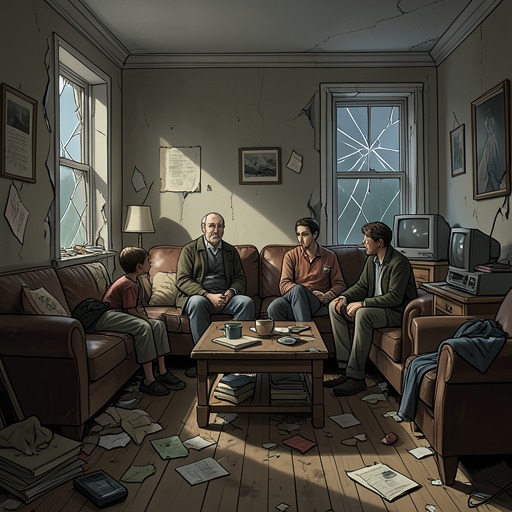
Danny and Ralphie are sent out from the Glick home under ordinary parental instructions. Marjorie Glick tells Danny to be home early because school is the next day and orders that his younger brother be in bed by quarter past nine. In the living room, Tony Glick watches the Red Sox and the Yankees and asks where the boys are going. Nothing in the family scene announces a supernatural crisis; the danger enters through a routine errand bounded by household rules and a familiar neighborhood.
The boys travel toward Mark Petrie’s house by a beaten path leading from the back of the mowed Glick yard down toward the woods. The Glick house stands on Brock Street and Mark’s on South Jointner Avenue, with the path providing a shortcut for children willing to cross the stepping-stones over Crockett Brook. Pine needles and twigs crackle beneath their feet, while a whippoorwill and crickets give the route the recognizable sounds of an autumn evening. The geography makes the disappearance more disturbing: Ralphie does not vanish in an unreachable wilderness but along a path used to save time between nearby homes.
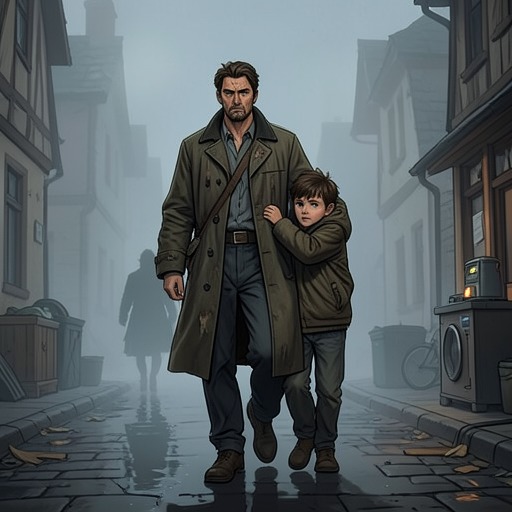
As daylight drains away, the woods become secretive. The whippoorwill stops calling, a branch snaps somewhere behind the boys, and the approaching darkness removes the ordinary visual security of the path. Ralphie shrieks, and then darkness enfolds the two children. The scene shifts from childhood movement through a known landscape to an abrupt loss of orientation, without providing an immediate human explanation for the cry or for what separates the brothers.
The Disappearance
Danny and Ralphie are expected home by nine. When they have not returned by ten past, Marjorie Glick telephones the Petrie house and learns that the boys never arrived. She passes the telephone to Tony Glick, feeling fear begin in her stomach. Before Tony can leave the yard, however, Danny stumbles out of the trees and collapses beside the backyard barbecue. His return confirms that something has happened, but it does not restore the family’s sense of reality.
Danny is dazed, slow-speaking, and inconsistent in his responses. Grass clings to his cuffs and autumn leaves remain in his hair, physical traces of a struggle or an unexplained fall. He cannot remember falling over anything. He says that everything was dark and that his next memory is of lying alone on the path. The crucial fact is not simply that Ralphie is absent; Danny, the surviving witness, has lost the memory that might identify the cause. His inability to narrate the event leaves the family with a witness who can confirm the separation but cannot explain it.
The immediate value shift is from ordinary safety to helpless uncertainty. The boys’ curfew has been broken, but the broken rule is quickly overshadowed by the discovery that one child has returned alone. Danny’s confusion prevents the adults from converting fear into knowledge, while Ralphie’s absence turns the familiar woods, brook, streets, and neighboring houses into a connected field of possible danger.
Search and Official Response
Parkins Gillespie initially decides that sending men into the woods that night would be pointless because of the deadfalls. He, Nolly Gardener, Tony Glick, and Henry Petrie instead move along the path and the shoulders of South Jointner and Brock streets, calling for Ralphie through battery-powered bullhorns. The response is practical and limited, shaped by terrain and darkness rather than by any recognition of supernatural danger.
Early the next morning, the Cumberland police and the state police begin a coordinated search of the wood lot. When that produces nothing, the search expands. For four days, searchers beat the bushes while Ralphie’s parents move through woods and fields around the deadfalls left by an ancient fire, repeatedly calling their son’s name. Their effort combines institutional procedure with private grief: the police widen the operation, but Mr and Mrs Glick supply its emotional center through an endless hope that the child may still answer.
The search then extends beyond the path. Taggart Stream and the Royal River are dragged, but no result is found. The absence of a body closes off the most ordinary explanations without supplying a new one. On Wednesday, September 24, after rain ends plans for further searching, the prevailing consensus is that the search is over and that the Glick boy is simply gone. Parkins Gillespie later acknowledges that the town may not find him alive, while the phrase that one resident has been “misplaced” reveals how bureaucratic understatement struggles to contain the horror of a missing child.
Historical Pattern and Marsten House
Ralphie’s disappearance becomes more ominous when set beside the Marsten House’s history. Ben Mears and Matthew Burke note that four children disappeared between 1928 and 1939, during the previous period when the house was occupied. The earlier cases could be explained individually as accidents common in a rural area: children might become lost, die of exposure, or be buried in a gravel-pit collapse. Yet the pattern gains force when the house is occupied again after thirty-six years and Ralphie disappears immediately.
This recurrence changes the event from an isolated missing-child case into a possible historical repetition. The temporal pattern matters as much as the physical evidence: four disappearances over ten years in the earlier period, followed by a new disappearance at the reoccupation of the house. The novel does not make the connection through an official report alone. It emerges through library research, conversation, memory, and the recognition that the town’s apparent normality has always rested over unresolved absences.
The Marsten House also belongs to a larger local archive of violence. Its scandal and brutality occurred before the current generation was born, yet small towns preserve horrors ceremonially from one generation to the next. That inherited memory gives Ralphie’s disappearance a setting in which old evil is never wholly past. The event activates the town’s accumulated stories even before the supernatural explanation is openly accepted.
Rumor, Mystery, and Consequences
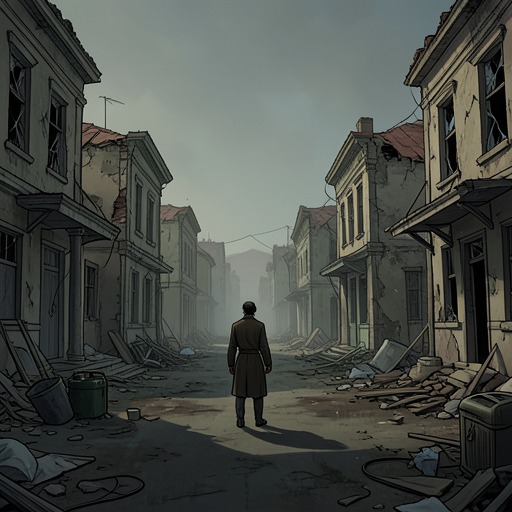
The disappearance helps create the reputation of ’Salem’s Lot as a ghost town and haunted place. Surrounding communities begin a whispering campaign in which colored lights over the Central Maine Power lines, UFO abductions, and a supposed dark coven practicing black mass compete as explanations. Others compare the missing people to young men who vanished near Houston and were later found in mass graves. These rumors do not solve Ralphie’s disappearance; they demonstrate how a community converts unexplained loss into competing narratives.
The event therefore produces two kinds of aftermath. On the personal level, the Glick family is left with a returned son who remembers only darkness and with a missing child whose fate cannot be confirmed. On the communal level, the failed search gives ’Salem’s Lot another secret to carry forward. The town’s people know some of its hidden crimes, believe they know others, and preserve both knowledge and error through gossip. Ralphie’s absence joins that unstable collective memory.
Most decisively, the disappearance begins the plot’s movement from apprehension to evidence. It precedes the later suspicion that the reoccupied Marsten House is connected to the town’s danger and prepares the reader to interpret subsequent disappearances not as unrelated accidents but as the recurrence of a buried pattern. Ralphie is not merely the first victim in a sequence; his disappearance is the narrative hinge on which ordinary rural life turns toward the vampire outbreak and ’Salem’s Lot’s eventual abandonment.